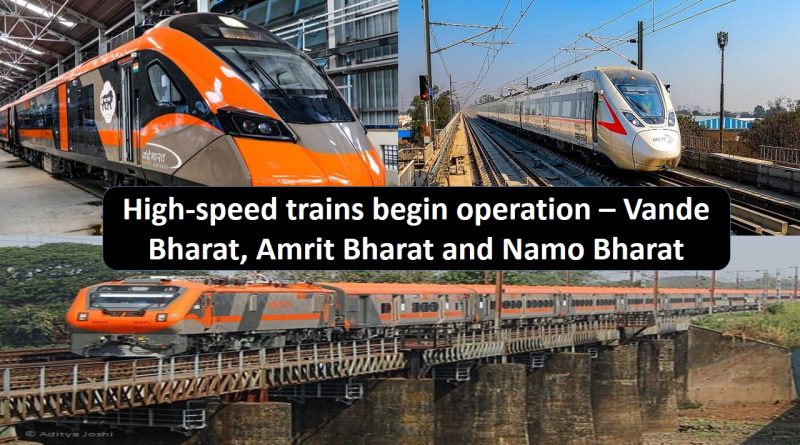
High-speed trains begin operation – Vande Bharat, Amrit Bharat and Namo Bharat
India’s transportation landscape is undergoing a remarkable transformation. As the country invests heavily in modern infrastructure, high-speed and semi-high-speed trains have emerged as a powerful symbol of progress. Among these advancements, the introduction of the Vande Bharat, Amrit Bharat, and Namo Bharat trains has not only revolutionized travel across India but has also brought states like Bihar into the national spotlight as rising hubs of connectivity and development.
Across India, these next-generation trains are reducing travel times, improving passenger comfort, and setting new standards for safety and efficiency. Featuring upgraded interiors, better seating, intelligent braking systems, and enhanced cleanliness, they have elevated the overall experience of rail travel—something millions of Indians rely on every day.
In this broader national context, Bihar stands out as a prime example of how modern rail infrastructure can uplift an entire region. Once seen as a state with limited connectivity, Bihar is now witnessing rapid transformation. The deployment of Vande Bharat, Amrit Bharat, and Namo Bharat trains on key routes has made travel to and from Bihar faster, smoother, and far more reliable. What used to be long and exhausting journeys have become effortless and time-saving experiences.
This progress is not just about convenience—it is deeply connected to India’s developmental trajectory. Improved rail connectivity is helping Bihar integrate more effectively with major economic centers, supporting trade, tourism, education, and employment across state and national boundaries. People traveling for studies, business, healthcare, or jobs now experience the benefits of India’s rapidly advancing rail ecosystem.
At a national level, these trains symbolize India’s push toward modernisation and self-reliance in transportation. At the state level, they represent new opportunities, renewed confidence, and a growing sense of pride for the people of Bihar.
As India continues to expand its fleet of high-speed and technologically advanced trains, states like Bihar are stepping into a new era—one where modern connectivity fuels growth, empowers citizens, and brings the nation closer together.
Vande Bharat: The new synonym for speed
Vande Bharat: India’s Flagship of Modern Rail Travel – The Vande Bharat Express, often called India’s first semi-high-speed train, represents a major leap in the country’s railway modernization journey. Designed and manufactured under the Make in India initiative, it showcases India’s growing technical capability and ambition in the transportation sector.
With speeds of up to 160 km/h, the Vande Bharat has significantly reduced travel time on some of the busiest routes in the country. It features advanced safety systems, comfortable seating, automatic doors, bio-vacuum toilets, and GPS-based passenger information systems—amenities that bring Indian rail travel on par with global standards.
One of the most striking aspects of the Vande Bharat is its indigenously built train-set design, which allows faster acceleration, superior stability, and energy efficiency. Its sleek, aerodynamic look and smart interior layout have made it popular among travelers of all age groups.
In the context of Bihar, the introduction of Vande Bharat trains has been particularly transformative. Routes connecting Patna and other major cities now offer faster and more comfortable journeys, making interstate travel smoother for students, professionals, and families. This improved connectivity is strengthening Bihar’s link with India’s major economic and cultural centers, contributing to increased mobility and regional growth.
The Vande Bharat is more than just a train—it is a symbol of India’s technological progress, confidence, and commitment to world-class public transport. As more Vande Bharat trains roll out across the country, they are helping shape a new era of modern, efficient, and people-centric travel in India.
Amrit Bharat: A ride for the common people
Amrit Bharat: Modernising India’s Rail Network for the Future – The Amrit Bharat Express is another major step in India’s effort to upgrade and modernise its vast railway network. Designed to offer affordable yet enhanced travel, this train focuses on improving long-distance passenger experience while maintaining accessibility for the common traveler. It bridges the gap between conventional express trains and premium services by introducing smarter, cleaner, and more comfortable coaches.
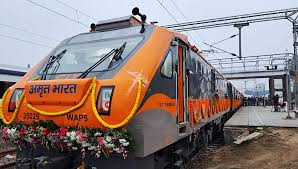
The Amrit Bharat Express is built with advanced features such as improved suspension systems, upgraded interiors, wider gangways, better lighting, and efficient ventilation. These improvements make long journeys smoother and more pleasant, especially for passengers who frequently travel across states. The train also incorporates modern safety features and energy-efficient systems, making it a more sustainable option for mass transport.
In the Indian context, the rollout of Amrit Bharat trains reflects the country’s commitment to democratising comfort—ensuring that modernization is not limited to high-end or premium services but reaches ordinary citizens as well. It represents a shift toward inclusive development at scale, strengthening India’s backbone of public mobility.
For Bihar, the introduction of the Amrit Bharat Express is highly meaningful. Many people rely on long-distance travel for education, work, healthcare, and business. With the arrival of these upgraded trains, passengers now have access to enhanced comfort without the burden of premium pricing. This has improved not just convenience but also regional connectivity, linking Bihar more closely with the rest of India’s transportation grid.
Ultimately, the Amrit Bharat Express is more than an upgraded train—it is part of a larger vision to bring modern, reliable, and accessible rail travel to every corner of India.
Namo Bharat: A new era of rapid rail
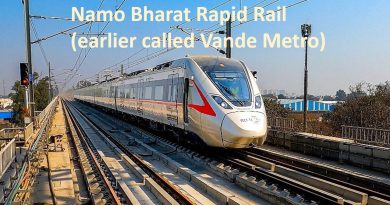
Namo Bharat: India’s New Era of Regional Rapid Transit – The Namo Bharat trains—introduced as part of India’s Regional Rapid Transit System (RRTS)—represent one of the most futuristic leaps in the country’s public transportation landscape. Designed to provide fast, frequent, and high-capacity transit between major cities and their surrounding regions, Namo Bharat brings metro-like speed and convenience to intercity travel.
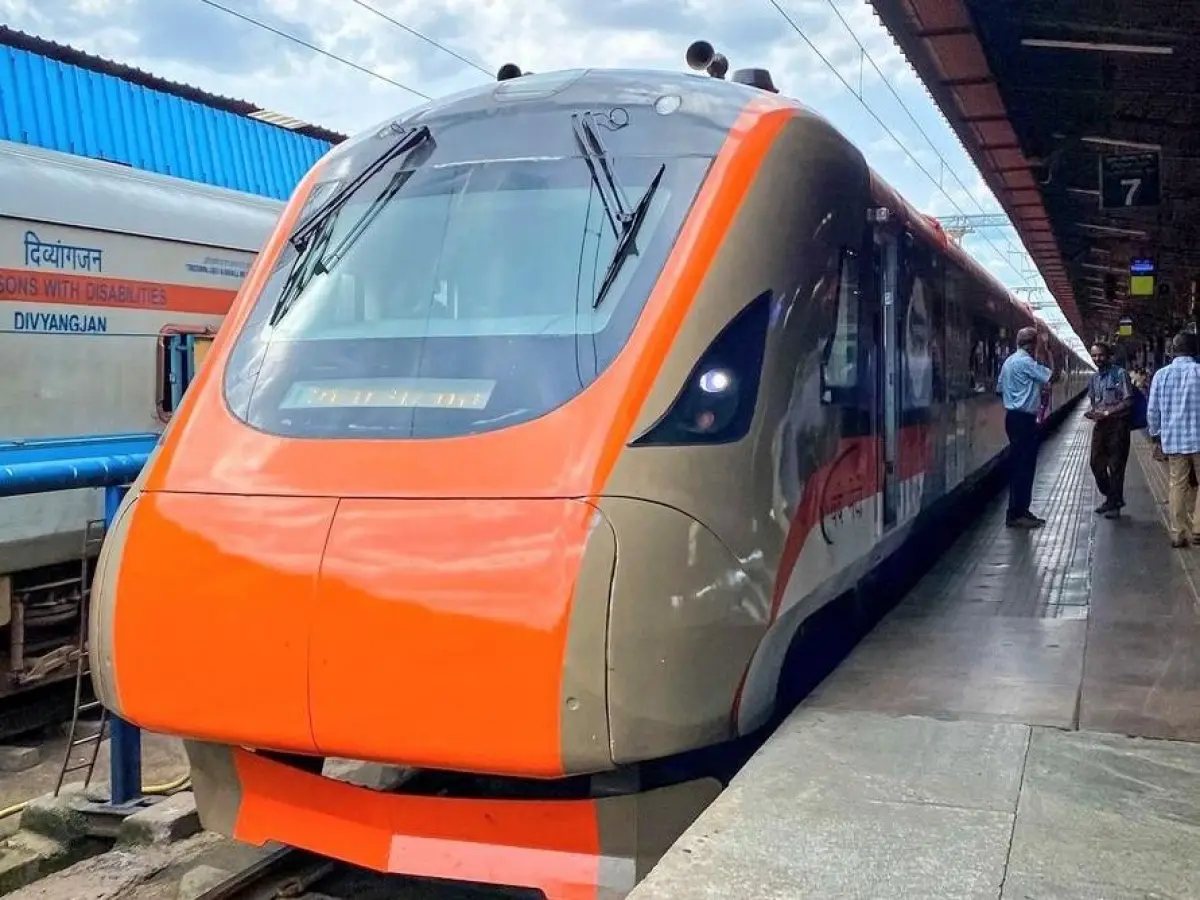
These trains operate at speeds of up to 160 km/h, enabling commuters to cover long distances in significantly less time. Built with cutting-edge technology, the Namo Bharat system includes features such as:
-
Modern, fully air-conditioned coaches
-
Automatic platform screen doors for safety
-
Priority seating and special coach provisions
-
Intelligent braking and advanced signaling
-
Real-time passenger information systems
What truly sets Namo Bharat apart is its vision: to reduce travel time between cities and suburbs, decongest roads, support economic corridors, and create seamless regional connectivity. It marks the beginning of a new transport culture in India where speed, comfort, and efficiency coexist with affordability.
Although the first Namo Bharat corridor began in the Delhi–Ghaziabad–Meerut region, its impact is national. As the RRTS network expands, states across India—including Bihar—stand to benefit from improved integration with national markets and mobility systems. Faster intercity access can boost trade, strengthen job mobility, and open new opportunities for students and professionals.
For Bihar, the emergence of Namo Bharat trains acts as an inspiration for future mobility solutions. The vision of rapid, high-tech regional connectivity aligns with India’s broader goal of creating world-class transport infrastructure that supports growth and modern lifestyles.
Namo Bharat is not just a train—it is a blueprint for India’s next generation of smart, rapid, and sustainable transportation.
Comparison Chart: Vande Bharat vs Amrit Bharat vs Namo Bharat
| Feature | Vande Bharat | Amrit Bharat | Namo Bharat |
|---|---|---|---|
| Category | Semi-high-speed express train | Upgraded long-distance express train | Regional Rapid Transit System (RRTS) train |
| Primary Purpose | Fast intercity travel with premium comfort | Affordable long-distance travel with modern features | Rapid regional connectivity between cities & suburbs |
| Max Speed | ~160 km/h | ~130 km/h (varies by route) | 160 km/h |
| Train Type | Fully air-conditioned, modern trainset | Modernised version of conventional coaches | Air-conditioned, high-speed RRTS trainset |
| Seating Arrangement | Chair car (AC), Executive Chair Car | Sleeper + general seating variants (non-AC/AC) | Metro-style & recliner seating |
| Key Features | Automatic doors, GPS info, plush seats, smart interiors | Improved suspension, bright interiors, wider passages, better comfort | Platform screen doors, real-time info, high acceleration, safety automation |
| Focus Area | Passenger comfort + speed | Affordable comfort + mass mobility | Speed + frequency + congestion-free travel |
| Operational Routes | Across major Indian cities | Across long-distance routes nationwide | First corridor: Delhi–Ghaziabad–Meerut (more planned) |
| Target Users | Premium passengers, business travellers, intercity commuters | Long-distance travelers, families, students | Daily commuters, office-goers, intercity regional travelers |
| Technology Level | High | Medium–High | Very High |
| Symbolises | Modernisation + Make in India engineering | Upgraded accessibility for all | India’s future urban–regional mobility system |
🚆 Who travels, and what they pay — by train
Vande Bharat Express
-
Business travellers / medium–long intercity travellers / those valuing comfort & speed
-
Uses AC Chair Car (CC) or Executive Chair Car (EC) seating.
-
Example: CC fares in recent runs range roughly ₹700–₹1,800, and EC fares roughly ₹1,300–₹3,200 (depending on route and distance).
-
On longer or popular routes, fares tend on the higher end; some special runs (e.g. festive or peak-demand) may further increase cost.
-
-
Commuters / occasional travellers (shorter intercity trips)
-
Vande Bharat may still be used for shorter trips — fare may be relatively lower (on lower end of fare range), but might still be higher than conventional trains.
-
-
Why pay premium: faster travel, better comfort, AC, amenities, reliability, suitable for business, work, urgent travel.
Amrit Bharat Express
-
Economy / mid-income long-distance travellers — especially those who previously used ordinary Mail/Express trains
-
Coaches include second class unreserved/generic and Sleeper class (non-AC), aimed at affordability + better comfort than older trains.
-
Fares are ~15–17% higher than comparable Mail/Express trains for second / sleeper class.
-
For example: for a short distance (1–50 km), basic fare in second-class starts ~ ₹35; for sleeper class ~ ₹46 (1–15 km) / ~ ₹65 (up to 50 km), before additional charges.
-
For long journeys (distance up to 5000 km), second-class fare ~ ₹933 and sleeper class ~ ₹1,469 (basic fare, excluding reservation / surcharge).
-
-
Regular people — students / families / labourers / middle-class travellers
-
Likely to find Amrit Bharat a balance of affordability and improved comfort over older trains.
-
Provides sleeper and general travel options at comparatively reasonable fares.
-
-
Why pay moderate extra: better comfort and coach quality, cleaner and more reliable service than older mail/express options, while still being accessible.
Namo Bharat Rapid Rail
-
Daily commuters / short-distance regional travellers between nearby cities/suburbs / suburban-style passengers
-
This service is positioned more like a “rapid-regional / intercity-metro” rather than long-haul express.
-
Fares are kept very affordable: minimum fare starts around ₹30 (GST inclusive).
-
For various city-to-city stretches (as in one corridor), typical fares vary up to ~ ₹180 depending on distance and type of coach (standard vs premium).
-
Premium-coach fare is slightly higher than standard — about 20% extra than standard fare.
-
-
Frequent travellers / daily commuters / office-goers / short-route passengers
-
For them, Namo Bharat offers a cost-effective, efficient, and fast alternative to buses or slower trains, at metro-like fares.
-
-
Why pay (very little): regular and frequent connectivity, comfort and speed for short/regional travel, ideal for commuting, work, errands, daily travel.
Summary: Who should choose what, based on purpose
| Traveller / Purpose | Best Fit | Approx. Fare Expectations* |
|---|---|---|
| Daily commuter / short-distance regional travel | Namo Bharat | ₹30 – ₹180 (depending on distance & coach) |
| Budget-sensitive long-distance travel (non-AC / sleeper) | Amrit Bharat | Slightly higher than old mail/express — e.g. ₹35 (short–distance), up to ₹1,469 (long-distance sleeper, base fare) |
| Business travellers / those needing comfort, speed, AC — medium to long intercity | Vande Bharat | ₹700–₹1,800 (Chair Car) / ₹1,300–₹3,200 (Executive) — depending on route & demand |
| Occasional travellers preferring comfort over price, mid-range budget | Amrit Bharat or Vande Bharat (depending on distance & comfort needs) | Moderate (Amrit Bharat) — or premium (Vande Bharat) |
* Fares are indicative base fares / common recent price ranges. Actual fare may vary by route, demand, additional charges (reservation, surcharge, catering, GST, etc.).
Conclusion: Matching Travel Needs to Fare
-
For short, intra-regional or commuter travel, Namo Bharat Rapid Rail seems ideal — low fare, frequent service, convenient for daily use.
-
For budget-conscious long-distance travellers who want better-than-basic comfort, Amrit Bharat Express strikes a balance between affordability and decent amenities.
-
For those prioritizing speed, comfort, AC, and relatively premium travel — especially on important intercity trips — Vande Bharat Express offers value, albeit at higher cost.
-
Thus, depending on the traveller’s category — daily commuter, student, professional, business traveller, family, etc. — Indian railways’ modern trains now offer options across a broad fare spectrum and comfort levels.