Complete Information About the FIR and Complaint Process – If You Get Robbed on a Train
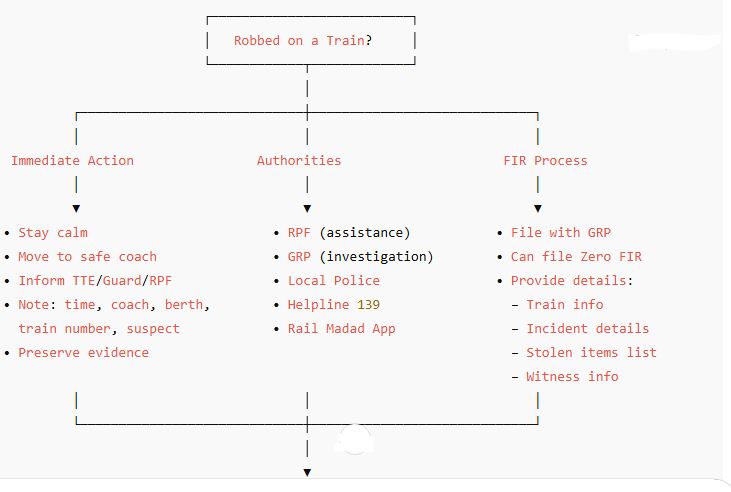
If you get robbed on a train, immediately inform railway staff like the TTE, Guard, or RPF and note key details such as train number, coach, berth, time, and suspect description. The RPF provides assistance, but the GRP (Government Railway Police) is responsible for registering the FIR and investigating the case. You can also file a Zero FIR at any police station if you have left the station. Complaints can be made through 139 Railway Helpline or Rail Madad App/Website. Provide full details of the incident and stolen items in the FIR. Legally, theft falls under IPC 379 and robbery under IPC 392. To prevent such incidents, keep luggage locked, stay alert, and avoid exposing valuables.
What to Do If You Get Robbed on a Train (FIR & Complaint Process)
1. Immediate Steps After the Robbery
-
Stay Calm and Safe
-
Move to a safer, well-lit coach or inform nearby passengers.
-
-
Inform Railway Staff
-
Tell the TTE, Coach Attendant, Guard, or RPF personnel immediately.
-
-
Preserve Evidence
-
Do NOT touch or disturb the crime spot.
-
Note down: time, coach number, berth number, train number, and suspect description.
-
2. Whom to Report to?
a) Railway Protection Force (RPF)
-
Responsible for protecting railway property and ensuring passenger safety.
-
Can take your complaint and help you connect with GRP.
b) Government Railway Police (GRP)
-
Responsible for investigating crimes against passengers.
-
FIR is filed only with GRP, not RPF.
c) Local Police
-
If you have already left the station or train, you can file an FIR at the nearest police station.
3. Filing an FIR (First Information Report)
a) Where to File an FIR?
-
GRP Police Station located at railway stations.
-
Local police station (Zero FIR allowed).
b) What is a Zero FIR?
-
FIR that can be registered at any police station, irrespective of the place of crime.
-
Useful if:
-
You have already travelled far from the crime location.
-
-
Can later be transferred to the appropriate jurisdiction.
4. Required Information for Filing FIR
-
Your name, address, phone number
-
Train name/number, coach, berth
-
Description of theft/robbery
-
List of stolen items with approximate value
-
Any witnesses
-
Suspect details (if observed)
5. How to File a Complaint Online
a) Indian Railways Helpline – 139
-
Call 139 to report theft/robbery.
b) Rail Madad App / Website
-
Register a complaint for immediate assistance.
-
RPF/GRP will contact you during your journey.
c) Police Online Services (State-wise)
-
Some states allow online FIR for theft.
6. Important Legal Points
-
Robbery = theft + intimidation/violence.
-
Sections involved:
-
Robbery: IPC 392
-
Theft: IPC 379
-
-
Crime on trains is treated like crime on land; police must register FIR.
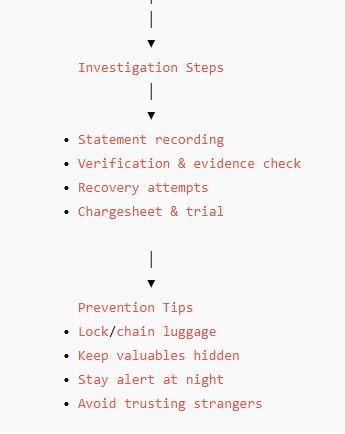
7. After the FIR: What Happens?
-
Police conduct investigation
-
Statements of victims and witnesses recorded
-
Recovery efforts for stolen items
-
Chargesheet filed in court
-
Court trial begins
8. Tips to Avoid Theft or Robbery on Trains
-
Use locks and chains for luggage
-
Avoid keeping valuables exposed
-
Don’t accept food from strangers
-
Stay alert during nighttime
-
Keep bags close when sleeping
Quick Revision Points
-
RPF protects, GRP investigates.
-
FIR must be filed with GRP (or zero FIR anywhere).
-
Use 139 or Rail Madad for help.
-
Provide full details: train, coach, items stolen.
-
Zero FIR is allowed if you’re far from the incident place.
Conclusion
Getting robbed on a train can be stressful, but knowing the correct steps ensures quick action and better chances of recovery. Reporting the incident immediately to railway authorities and filing an FIR with the GRP are essential for a proper investigation. With support systems like the 139 helpline and the Rail Madad app, passengers can seek timely help even while traveling. Staying aware, securing belongings, and understanding your legal rights can greatly enhance your safety during train journeys.